
WASHINGTON. The Trump administration is warning governments and businesses around the world to reduce their economic ties with Iran or risk penalties from the United States.
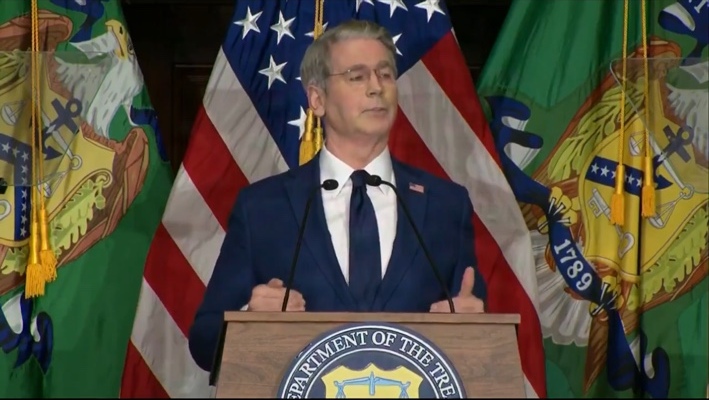
Treasury Secretary Scott Bessent announced the new campaign on Monday, August 24. The official Treasury transcript says he acted at President Donald Trump’s direction.
The administration calls the campaign Operation Economic Outcast. Its stated goal is to cut Iran off from the money, oil sales, shipping services and technology it receives through other countries.
Bessent also said President Trump has been calling world leaders with specific requests to stop dealing with Iran.
The public message is strong. Countries that continue certain business with Iran could lose access to American banks, dollars and markets.
This is a serious increase in economic pressure during a war that is already underway. It is not a new declaration of war, and the administration did not publicly order other countries to send troops. The demand announced Monday is mainly about trade, banking and transportation.
What does “choose a side” mean?
Iran depends on oil sales, banks, ships and technology to bring money into the country. The Trump administration wants other nations to shut many of those connections down.
The United States says it is focusing on buying or transporting Iranian oil, helping Iranian banks move money, supporting certain Iranian flights, registering ships connected to Iran, selling technology or equipment to Iran, and helping the country trade gold or digital money.
U.S. officials say money from these activities can help Iran pay for military, missile and nuclear programs. Iran says its trade is lawful and that Washington does not have the right to control its relationships with other countries.
The warning is backed by the power of the U.S. financial system. Much of the world’s international business uses American dollars. If the Treasury Department blocks a company or bank from that system, it can become very difficult for that business to operate. These penalties are called sanctions.
A secondary sanction can punish a foreign business for dealing with an already sanctioned country, company or organization, even when the foreign business is not based in the United States.
In simple terms, the United States is warning businesses and governments that helping Iran could cost them access to the U.S. financial system.
What did the United States do immediately?
The Treasury Department announced sanctions against nearly 60 people, companies and ships. U.S. officials accused them of helping Iran earn oil money, obtain nuclear and missile technology or carry out cyber operations.
The department also widened the kinds of activity that may lead to secondary sanctions in five areas: shipping, aviation, technology, gold and digital assets, including cryptocurrency.
Treasury also suspended several special permissions that had allowed certain money transfers to Iran and some Iranian access to U.S. cultural and academic programs.
The United States did not announce immediate penalties against every country that trades with Iran. Bessent said countries would have time to change their behavior. The administration has not publicly released each deadline or named every government that could be punished. Important details about future enforcement are still unknown.
Who made the announcement?
Scott Bessent made the public announcement at the Treasury Department.
The official transcript says the operation began at President Trump’s direction. Bessent also said Trump was personally calling world leaders. Bessent delivered the public message, but the administration says the order came from the president.
Bessent compared the economic campaign with D Day, the Allied military operation during World War II. That comparison came from Bessent. It does not mean that the administration announced a new military invasion.
The action announced Monday is an economic campaign taking place during an existing war.
How did the war begin?
The United States and Iran have been enemies for decades. Their relationship broke down after Iran’s 1979 revolution and the seizure of the U.S. Embassy in Tehran. Since then, they have fought over Iran’s nuclear program, attacks on U.S. forces and Iran’s support for armed groups across the Middle East.
In 2015, Iran and several world powers reached an agreement that limited parts of Iran’s nuclear program in exchange for relief from sanctions.
President Trump withdrew the United States from that agreement in 2018 and restored major sanctions. Iran later reduced its compliance with parts of the agreement. Later efforts to reach a new deal failed.
The current war began on February 28, 2026, when the United States and Israel launched attacks inside Iran. The attacks targeted Iranian leaders and military, missile and nuclear sites.
The Trump administration said the attacks were meant to stop Iran from obtaining a nuclear weapon and reduce its ability to threaten the United States and its allies. These are the administration’s stated reasons for the operation.
Iran called the attacks an act of aggression. It responded with missiles and drones aimed at Israel, U.S. bases and locations in Gulf countries.
Large attacks later slowed during ceasefires and negotiations, but those agreements did not produce lasting peace. Fighting around important shipping routes continued.
Why does the Strait of Hormuz matter?
A major part of the conflict now centers on the Strait of Hormuz.
The strait is a narrow waterway between Iran and Oman. Ships use it to move oil and natural gas out of the Persian Gulf.
Before the war, more than 20 million barrels of oil moved through the strait each day. That was about one fifth of the oil consumed around the world.
When ships cannot move safely through the strait, less oil reaches the market. That can raise oil and gasoline prices, even in countries far from the fighting.
Shipping through the strait has fallen sharply during the war. Iran has attacked or threatened ships. The United States has used military force to restrict Iranian shipping and protect other vessels.
On August 25, an oil tanker was struck by an unidentified projectile near the entrance to the strait, according to the United Kingdom Maritime Trade Operations. No government had been publicly identified as responsible when this article was prepared.
The strait remains one of the most dangerous parts of the conflict. Another major attack there could disrupt energy supplies or lead to more military action.
How is Iran responding?
Iran says it will resist the expanded U.S. pressure.
Iranian officials have called the sanctions unlawful and have warned that countries helping the United States could face consequences.
Iran also argues that sanctions harm ordinary people, not only government leaders. Its economy was struggling before the war. Its currency has since fallen to record lows, prices have increased and people in Tehran have waited in long lines for fuel. Sanctions can reach families who have no control over their government’s decisions.
At the same time, Iran has shown that it can still threaten ships and energy supplies. This gives Tehran a way to place economic pressure on the United States and other countries.
Which countries are most affected by the warning?
China may be the biggest test because it has been Iran’s largest oil customer. China says its trade with Iran follows international law and should not be disrupted by the United States.
Bessent said no country is beyond the reach of U.S. sanctions. However, the penalties announced Monday did not target China’s largest financial institutions.
Turkey and the United Arab Emirates have also been among Iran’s largest trading partners.
The UAE recently suspended trade and financial dealings with Iran after a reported Iranian missile attack. Bessent said he did not believe the timing of that decision was a coincidence.
Other governments must now decide whether continuing certain trade with Iran is worth the risk of losing access to American money and markets.
Could this lead to more fighting?
It could, but more war is not automatic.
Bessent has said economic pressure could reduce the need for another large military campaign. However, U.S. officials have not ruled out more strikes. Iran has threatened to respond if its economy or infrastructure comes under greater pressure.
There have been no major direct U.S. or Iranian strikes for several weeks. Pakistan is working as a mediator, and Pakistani officials reported progress in talks meant to reduce the fighting and reopen the Strait of Hormuz.
Iran has expressed a general willingness to return to peace talks, according to officials involved in the mediation. No final agreement has been reached. Economic pressure could push both sides toward a deal, or it could lead to more fighting.
What happens next?
Watch whether countries reduce trade with Iran and whether the United States imposes penalties on major foreign banks and companies.
Iran could respond with attacks on ships, computer systems, military sites or energy routes. A safe reopening of the Strait of Hormuz and a return to serious peace talks would point in the other direction.
Why should Americans pay attention?
This conflict can affect people far beyond the Middle East.
Problems in the Strait of Hormuz can raise oil and gasoline prices. Higher fuel costs can also increase the price of food, deliveries and air travel.
A wider war could put American troops and citizens in the region at greater risk. It could also draw U.S. allies into new military or economic disputes.
There is also a human cost. Reuters reports that thousands of people have died during the conflict, most of them in Iran and Lebanon. Families across the region continue to live with attacks, shortages and fear.
The bottom line
The Trump administration is not publicly demanding that every country join the military fighting. It is demanding that countries stop helping Iran earn or move money.
Treasury Secretary Scott Bessent delivered that message on President Trump’s behalf. The United States is warning that nations and businesses that continue certain dealings with Iran could lose access to American dollars, banks and markets.
Iran says it will resist that pressure. China says its lawful trade should not be disrupted. Mediators are still trying to restart negotiations.
A larger war is not certain. However, the pressure is growing, the Strait of Hormuz remains dangerous and decisions made by world leaders could move the conflict toward negotiations or toward heavier fighting.
This is a developing story. Good News Now will continue following verified information without treating fear or speculation as fact.
Sources and further reading
- Remarks on Operation Economic OutcastU.S. Department of the Treasury
- Treasury launches new Iran sanctions campaignU.S. Department of the Treasury
- Operation Economic Outcast announcement and videoThe White House
- Countries warned to sever financial ties with IranAssociated Press
- Iran vows to resist widened U.S. sanctionsReuters
- Timeline of the Iran conflict and peace effortsAssociated Press
- Iran nuclear agreement verification recordInternational Atomic Energy Agency