
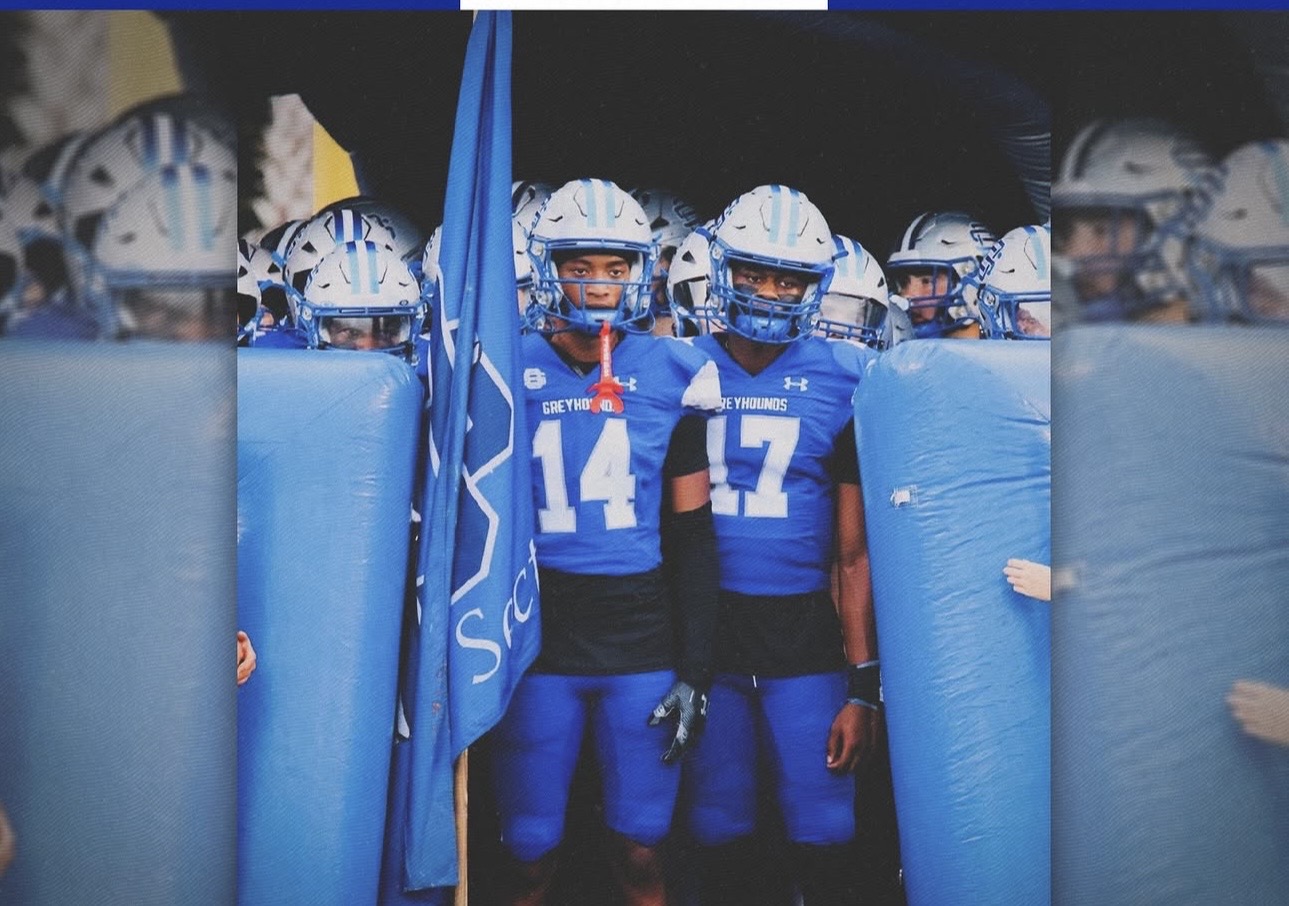
ORLANDO, Fla. A digital forensic expert retained by Nolan Xavier Wells’ family says Snapchat data was deleted from Nolan’s phone after his last confirmed use of the device and before his parents recovered it.
Andrew Garrett, CEO of Garrett Discovery, presented the findings Thursday, September 24, alongside civil rights attorney Ben Crump and members of the Wells family’s legal team.
Garrett did not identify who deleted the data or suggest why it was deleted. He said only that the deletions required a user action.
“There were things that were deleted from the phone.”Andrew Garrett, Garrett Discovery
Garrett said he could not speak to anyone’s intent but could confirm the deletions from a digital forensic standpoint.
The finding does not, by itself, establish evidence tampering or other criminal conduct. The presentation did not establish who deleted the material, why it was deleted or whether that person had physical possession of Nolan’s phone.
Crump said the phone findings, the recently obtained state autopsy report and the still unexplained injuries documented on Nolan’s body show why the circumstances surrounding his death require further investigation.
More Than One Million Digital Artifacts Identified
Garrett said his team identified and analyzed more than one million digital artifacts from Nolan’s phone.
The forensic examination included location information, application activity, screen activity, calls, messages and data associated with Nolan’s social media accounts. Garrett said approximately 95 percent of Nolan’s communications occurred through Snapchat and Instagram rather than traditional text messages.
Because commonly used forensic tools could not fully process the version of Snapchat installed on Nolan’s phone, Garrett said his team had to decrypt and reconstruct portions of the data manually.
Garrett said the initial forensic acquisition of the phone took approximately 30 hours, about 12 hours beyond the handoff time initially requested by law enforcement. He said the additional time was communicated to officials and approved.
Garrett said his team prioritized accuracy and protecting the phone from damage over completing the process within the original time frame.
The forensic team also created a video reconstruction showing the phone’s reported movements and activity throughout July 4 and into the following morning. The reconstruction is a visualization created from the phone’s data. It is not continuous video footage of Nolan.
Nolan’s Last Confirmed Phone Use
According to Garrett, Nolan’s phone arrived on Horn Island at approximately 11:18 a.m. and entered a locked state.
The phone was unlocked at approximately 2:17 p.m., when application activity resumed. Garrett attributed the device’s last confirmed use by Nolan to approximately 2:18 p.m.
Location data placed the phone aboard a boat at that time. The location of the device does not, by itself, independently establish Nolan’s physical location.
After that activity, the phone was locked again. Garrett’s team did not attribute any later physical use of the device to Nolan.
Location data showed the phone traveling away from Horn Island by water, reaching a boat ramp and later arriving at a residence. Garrett said Nolan’s parents recovered the phone at approximately 3 a.m. the following morning.
Hundreds of messages from group conversations continued to arrive or synchronize with Nolan’s account until the phone was collected. Those incoming messages should not be interpreted as proof that Nolan was personally using the phone.
Snapchat Data Was Deleted
Garrett said his team identified Snapchat material that had been deleted during the period between Nolan’s last confirmed use of the phone and his parents’ retrieval of it.
He said a user action was required for the deletion to occur. However, the presentation did not establish who performed that action, whether the person had Nolan’s physical phone or what the person intended.
Garrett said his role was limited to analyzing and presenting the digital evidence, not determining whether a crime occurred.
Jackson County District Attorney Angel Myers McIlrath previously said a 14 page preliminary report indicated that the phone had not been accessed by anyone other than Nolan’s family and that nothing had been deleted since Nolan’s last use.
Garrett said Thursday that commonly used forensic tools could not fully process the installed version of Snapchat and that his team subsequently reconstructed portions of the application data manually.
Good News Now has not independently determined whether that later analysis accounts for the difference between the district attorney’s earlier statement and Garrett’s presentation.
Expert Says He Was Not Asked to Testify
Garrett said neither he nor anyone from his forensic team was contacted or asked to testify before the Jackson County grand jury.
The grand jury did, however, receive the team’s written findings. Its report says jurors considered a 14 page preliminary phone report, a 21 page final mobile device report and a 261 page Snapchat report.
Garrett said the district attorney’s office also received a forensic image of the phone, the written reports and an unredacted version of the timeline reconstruction.
The distinction is important. The grand jury received and considered the reports, but Garrett said jurors did not hear directly from him or another member of his team.
State Autopsy Report Provided to Legal Team
Crump said Nolan’s mother previously submitted a request for the state autopsy report but did not receive it.
According to Crump, the matter was brought to McIlrath’s attention on Wednesday. Crump said McIlrath acknowledged that she had not been aware of the request and determined that required next of kin information was missing.
The legal team said it received the report Wednesday evening. Good News Now has not independently verified the attorneys’ account of Wednesday’s communications with the district attorney’s office.
The state report, signed August 17, 2026, officially classifies both Nolan’s cause of death and manner of death as undetermined.
Co-counsel Liza Park summarized the findings for the audience in plain language as showing no water in Nolan’s lungs, throat or stomach.
The state autopsy’s written wording is more specific. It says there was “no fluid or debris within the airways” and that Nolan’s stomach was empty. Dr. Roger Mitchell’s final independent autopsy report similarly states that the original pathologist did not identify water in the airway or gastric contents, including water, in the stomach.
Those findings do not, by themselves, prove that drowning was impossible. The state medical examiner did not certify drowning as Nolan’s cause of death.
Head Injuries Remain Unexplained
Crump said the legal team is still trying to determine who or what caused the injuries documented on the back of Nolan’s head.
The state autopsy documented two contusions on the back of Nolan’s head. Dr. Mitchell’s independent examination characterized those contusions and injuries found on other areas of Nolan’s back as recent, unexplained blunt force injuries.
Dr. Mitchell’s microscopic examination found hemorrhaging in tissue from the back of Nolan’s head without a significant white blood cell response. His report says the finding was compatible with a very recent injury sustained while Nolan was still alive, generally within the first few hours before death.
Park summarized the finding as indicating that the injury occurred within approximately four hours of Nolan’s death. Dr. Mitchell’s written report is less exact. It notes that inflammatory cells become increasingly detectable at approximately four hours after an injury.
The finding does not establish what caused the injury, who, if anyone, was responsible or whether the injury contributed to Nolan’s death.
The grand jury report says a witness saw Nolan slip awkwardly from the side of a boat at approximately 3:30 p.m. but could not say whether Nolan struck his head.
According to the report, Nolan continued socializing and did not appear injured afterward. The grand jury said it could not determine with certainty whether that fall caused the bruising.
Grand Jury Found No Basis for Criminal Charges
A Jackson County grand jury returned a unanimous no true bill, meaning it found insufficient evidence to indict anyone in connection with Nolan’s death.
The grand jury found no credible evidence that the occupants of the three boats identified in its report engaged in criminal conduct related to his death.
It also concluded that the position, condition, discovery time and location of Nolan’s body were consistent with drowning.
However, “consistent with drowning” is not the same as an official determination that Nolan drowned.
The grand jury report states that both Mississippi’s chief medical examiner and Dr. Mitchell classified Nolan’s cause and manner of death as undetermined.
It also says neither expert ruled out accidental drowning and describes drowning as a diagnosis of exclusion, meaning it may be considered after other reasonable causes cannot be established.
“This Matter Still Needs to Be Investigated”
Crump said the newly presented phone findings do not resolve how Nolan died.
Instead, he argued that the deleted Snapchat data, continuing group conversations, phone location timeline and unexplained injuries demonstrate why the inquiry should remain open.
The family’s legal team continues to call for the investigative file to be released and for the U.S. Department of Justice to conduct an independent federal review.
Crump also said the legal team expects to hold another news conference next week and indicated that Dr. Mitchell may participate. A date and Dr. Mitchell’s participation have not been formally confirmed.
The grand jury report acknowledges that Mississippi has no statute of limitations for homicide. It says the case should be presented to another grand jury if credible evidence emerges suggesting that Nolan’s death was not accidental.
For now, the central question remains unanswered: What happened to Nolan Xavier Wells?
Watch the full news conference on Ben Crump’s Facebook page.